

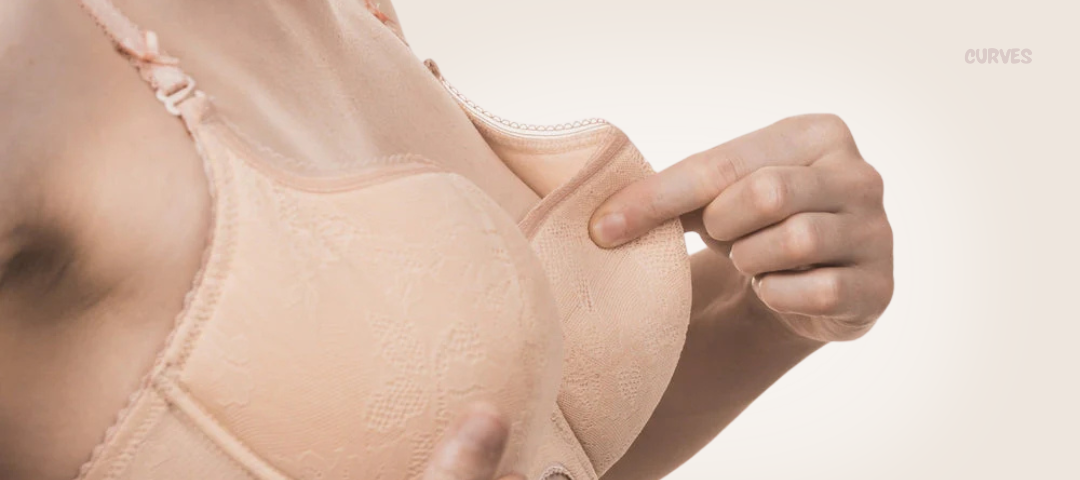
Why Does My Bra Gap in the Front? (How to Fix Cup Gapping After 40)
If you’ve ever looked down and noticed a hollow space between your skin and your bra cup, you’ve experienced "the gap." It’s frustrating, it ruins the line of your clothes, and for most of us over 40, it feels like another instance of body betrayal.
You might think the solution is simply "buying a smaller size." But it’s rarely that simple. The industry's 100-year-old "Top-Down" architecture is failing your body's natural evolution.
Here is why your bra is gapping and how to finally achieve a seamless, lifting fit.
1. The Midlife Volume Shift
As we navigate perimenopause and menopause, our breast tissue often changes in density and volume. What used to be "perky" volume at the top of the chest often settles toward the bottom.
Legacy bras (especially those with stiff underwires) are designed for a static, youthful shape. If the top of the cup isn't filled, the bra collapses forward creating that annoying gap.
You don't necessarily need a smaller cup. You need intelligent support that molds to your unique density.
2. Your Straps Are Doing Too Much Work
Most bras rely on "Top-Down" support. It means the weight of your chest hangs entirely from your shoulder straps. When straps are too tight in an attempt to create lift, they can actually pull the top of the cups away from your body. That's what causes them to flare out or gap.
This is part of the daily management tax. That constant need to adjust and tug just to keep your bra in place.
3. The Architecture is Upside Down
If you have side-set breasts or have lost volume at the top, a traditional wired bra acts like a cage that your tissue is "slipping" out of.
At Curves, we replaced that outdated logic with base-up architecture. Instead of hanging your weight from the ceiling (your shoulders), our medical-grade jelly strips act like a floor. They redistribute support from the underband and side structures upward.
When the support comes from beneath, the cup remains flush against your skin because the "lift" is integrated into the entire base of the bra. Not just pulled from the top...
4. You’re Wearing the Wrong Shape
Not all "gaps" are created equal. If you are wearing a full-coverage bra but have a "shallow" top shape (common after nursing or weight shifts), you will almost always have extra fabric at the peak of the cup.
How to Fix Bra Cup Gapping for Good
- The Scoop Test: when you put your bra on, lean forward and "scoop" your tissue into the cups. If the gap remains after a scoop, the arcchitecture is the issue.
- Check The Band: if your band is too loose, the cups cannot sit flush. Your band should be level all the way around.
- Switch to Adaptive Materials: this is why we created SoftArch. Unlike rigid wires or foam, the jelly strips are flexible support beams that mold to your current shape in real-time. They fill the space where you need it and provide lift where you don't.
5. The 9am Test
At Curves, we believe a bra should be "invisible" support for an invisible garment. Our goal is simple:
If you are still thinking about your bra gaping or digging by 9 am, the design has already failed.
Stop negotiating with your undergarments. Reclaim your silhouette and your comfort with support designed for the body you live in today.

Leave a comment
This site is protected by hCaptcha and the hCaptcha Privacy Policy and Terms of Service apply.